
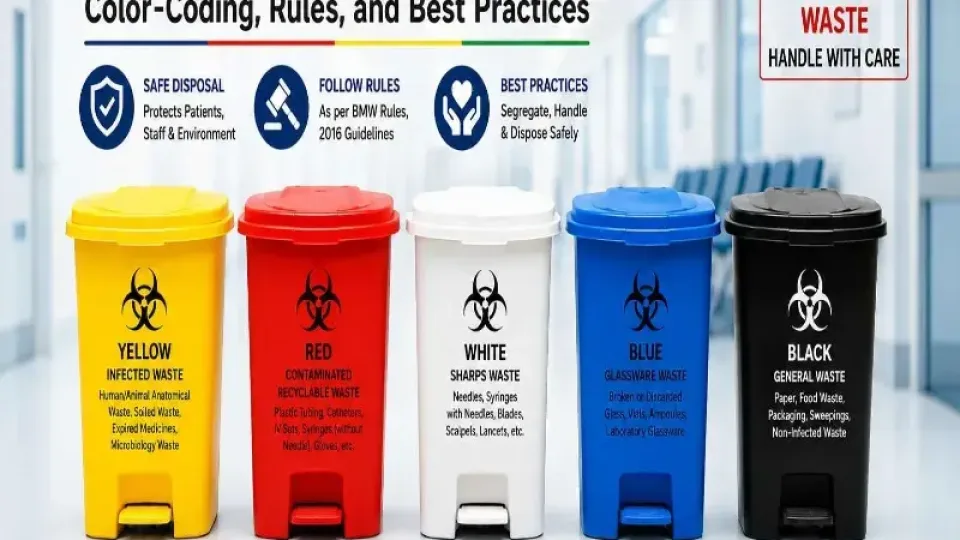
Maintaining rigorous standards of hygiene, safety, and regulatory compliance is vital for hospitals, nursing homes, and diagnostic laboratories. When managing medical waste, facility administrators frequently ask: which colour dustbin is used for hospital waste? Proper waste containment is critical because incorrect disposal practices can rapidly spread infections, jeopardize patient safety, and breach strict environmental laws.
This comprehensive guide examines how bio-medical waste dustbins are utilized, the regulatory rules governing them, and how choosing the right heavy-duty containers protects healthcare environments.
The 4-Color Dustbin System for Hospital Waste Segregation
When looking into what are the 4 color dustbin in hospitals, healthcare facilities must adhere to standardized color-coding protocols mandated by biomedical waste management regulations. Segregating waste at the point of generation ensures that each type of medical byproduct is treated or disposed of safely.
The four standard color-coded bins include:
-
Yellow Bins: Designated for soiled and infectious waste, including items contaminated with body fluids, dressings, cotton, plaster casts, expired or discarded medicines, and human/animal anatomical waste.
-
Red Bins: Reserved for recyclable plastic and rubber waste, such as tubing, catheters, intravenous (IV) bottles and sets, urine bags, and disposable syringes without needles.
-
White / Translucent Bins: Used exclusively for sharp metal items, including needles, fixed-needle syringes, scalpels, and blades that pose puncture hazards.
-
Blue Bins: Allocated for metallic body implants, broken or unbroken glass, and vials, which is precisely why a blue sharps bin or specialized glass collection container is deployed.
Understanding these systems directly answers what are the 4 categories of biomedical waste, forming the operational foundation for healthcare waste handlers across the nation.
Material Selection: Plastic vs. Heavy-Duty Stainless Steel Bins
A common question facility managers face is what is a bio waste bin and whether temporary plastic containers are sufficient for high-traffic healthcare environments. While standard plastic color-coded bins are widely used for segregation, major hospitals, multi-specialty surgical units, and emergency wards require heavy-duty stainless steel dustbin solutions.
Stainless steel units—particularly those manufactured from high-grade SS 304—offer exceptional advantages over standard plastics. They are completely rust-proof, non-porous, and resistant to aggressive chemical disinfectants used during routine sanitization protocols. For institutional buyers seeking specialized options, our medical and bio waste bin collection provides purpose-built configurations designed to meet rigorous healthcare standards.
Best Practices for Hospital Waste Management & Bulk Sourcing

Implementing proper waste segregation infrastructure requires careful planning and adherence to strict operational protocols. When procuring or managing bio-medical waste containers in healthcare facilities, keep these essential best practices in mind:
-
Hands-Free Operation: To prevent cross-contamination among patients, visitors, and medical staff, every bio-medical waste bin must feature a foot-operated pedal mechanism. This ensures zero hand contact with the lid during disposal.
-
Leak-Proof and Durable Build: Infectious and liquid-contaminated waste requires completely sealed, heavy-gauge containers to prevent leaks, spills, and foul odors from spreading across hospital wards.
-
Strategic Placement: Color-coded bins should be stationed side-by-side at every generation point (such as nursing stations, operation theaters, and consultation rooms) to make immediate, error-free sorting effortless.
-
Heavy-Traffic Endurance: Emergency departments and high-footfall corridors demand robust hardware. For heavy-duty requirements outside standard medical sorting areas, exploring options like our commercial steel dustbins ensures long-term operational resilience.
Conclusion
Adhering to biomedical waste management rules is not only a legal compliance mandate for hospitals, laboratories, and clinics, but it is also a fundamental pillar of public health and infection control. By deploying a rigorous 4-color segregation system alongside premium, easy-to-sanitize containers, healthcare facilities protect workers, patients, and the community. Sourcing these heavy-duty items directly from trusted manufacturers guarantees high material standards, customized specifications, and cost-effective bulk pricing.
Comments
No comments yet. Be the first to comment.